
Backlinks are one of the most powerful ranking factors in SEO, but not all backlinks are created equal.
If you really want to rank higher on Google, you need to understand what high quality backlinks are and how they impact your website’s authority.
In this guide, we’ll break it down in the simplest way possible so even beginners can understand and start applying it.
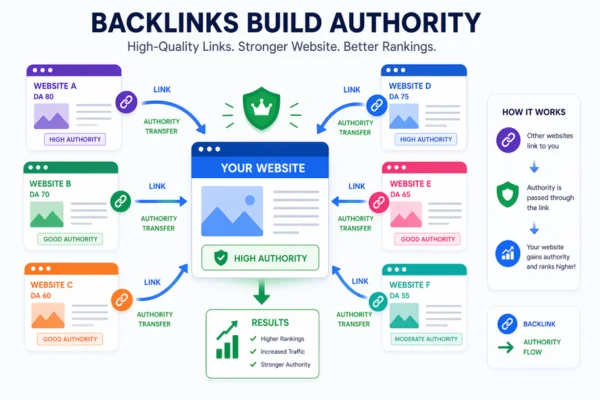
What Are High Quality Backlinks?
High quality backlinks are links from other websites that are trustworthy, relevant, and authoritative.
When a reputable website links to your content, search engines like Google see it as a vote of confidence.
The more high quality backlinks you have, the more credible your website appears.
According to Google Search Central, backlinks are one of the key factors used to determine the credibility and ranking of a website.
For a deeper understanding, read our pillar guide:
Why High Quality Backlinks Matter for SEO
High quality backlinks play a major role in improving your rankings.
Here’s why they matter:
1. Improve Search Engine Rankings
Websites with strong backlinks tend to rank higher in search results.
2. Build Website Authority
Backlinks from trusted sites increase your domain authority.
3. Drive Referral Traffic
Users can click backlinks and visit your site directly.
4. Faster Indexing
Search engines discover your pages faster through backlinks.
5. Trust & Credibility
High quality backlinks signal that your content is valuable.
Studies from Ahrefs show that pages with more high quality backlinks tend to rank higher in search results.
Characteristics of High Quality Backlinks
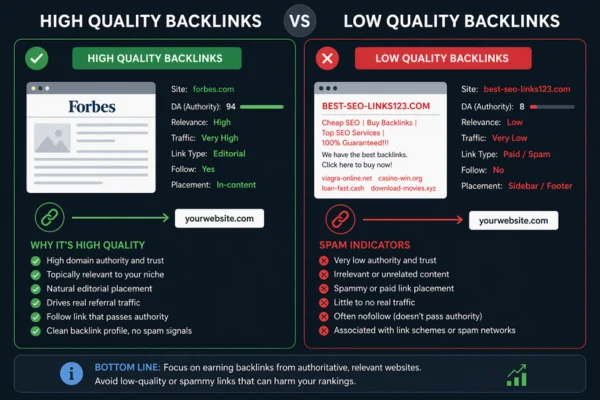
Not every backlink is beneficial. Some can even harm your SEO.
Here are the key features of high quality backlinks:
Relevant Source
The linking website should be related to your niche.
High Authority Website
Links from strong domains carry more SEO value.
DoFollow Attribute
DoFollow links pass SEO value to your site.
Learn more here:
Natural Placement
Backlinks should be placed naturally within content.
Real Traffic Source
The linking page should have actual visitors.
High Quality vs Low Quality Backlinks
Understanding the difference is crucial for SEO success:
- High Quality Backlinks Low Quality Backlinks
- Relevant websites Irrelevant websites
- High authority domains Spammy domains
- Organic placement Forced or paid spam links
- Real traffic No traffic
- Boost rankings Can harm rankings
What makes a high quality backlink?
How to Get High Quality Backlinks?
Now let’s talk about the most important part — how to actually build high quality backlinks.
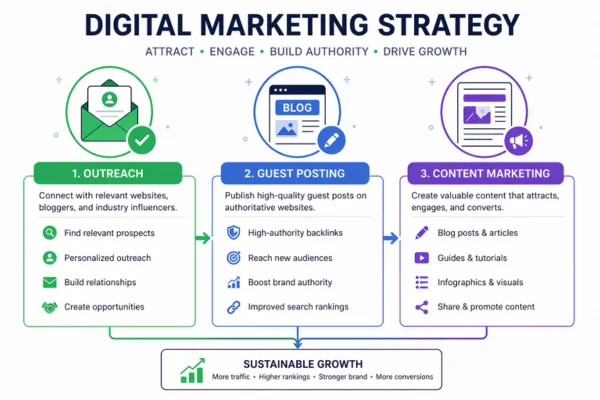
1. Guest Posting
Write valuable content for other websites in your niche.
2. Content Marketing
Create high-quality blogs that others want to link to.
3. Outreach
Reach out to website owners and request backlinks.
4. Local SEO Strategies
Get backlinks from local directories and listings.
Related read:
5. Build Relationships
Networking helps you earn natural backlinks over time.
How to Build High Quality Backlinks (Video Guide)
Watch this video to understand practical strategies for building high quality backlinks step by step.
Common Mistakes to Avoid
Avoid these mistakes when building backlinks:
- Buying spammy backlinks
- Using automated link-building tools
- Getting links from irrelevant sites
- Ignoring content quality
- Over-optimizing anchor text
Are High Quality Backlinks Still Important in 2026
Yes — high quality backlinks are still one of the strongest ranking factors.
While Google’s algorithm has evolved, backlinks remain a key signal for authority and trust.
However, the focus is now on quality over quantity.
FAQs
What makes a backlink high quality?
A backlink is high quality if it comes from a relevant, authoritative, and trustworthy website.
How many high quality backlinks do I need?
There is no fixed number. Even a few strong backlinks can outperform hundreds of low-quality ones.
Can bad backlinks hurt SEO?
Yes, spammy backlinks can negatively impact your rankings.
Are DoFollow links better than NoFollow?
DoFollow links pass SEO value, but NoFollow links can still bring traffic and diversity.
Conclusion
High quality backlinks are essential for building authority, improving rankings, and growing your website.
Instead of chasing hundreds of links, focus on getting a few strong and relevant ones.
That’s the real secret to long-term SEO success.